The Best Traditional Rugs for Your Home
What actually makes a traditional rug worth buying, the best design for each room, and the things people pay extra for that make no difference at all.
"Best" is a difficult word with rugs, because the best rug for a marble-floored drawing room in Quetta is not the best rug for a small bedroom in Karachi. What does transfer between homes is a set of qualities worth paying for, and a few that are not worth the money.
This is a practical ranking of what makes a traditional rug good in a Pakistani home, and which designs do the job best.
What makes a traditional rug worth buying
It hides ordinary life
This is the quality most people underrate until they own a plain rug. A dense traditional pattern disguises crumbs, footmarks, dust and the general traffic of a family room. A plain or very open field shows all of it, and shows it immediately.
In a country where dust is a daily fact, pattern density is not decoration – it is maintenance you do not have to do.
It gives the room a centre
A medallion design tells the eye where the middle of the room is. That is exactly what a seating arrangement needs, and it is why traditional rugs make a room look deliberately furnished rather than assembled.
It survives a change of furniture
A traditional palette is built from several related tones rather than one dominant colour, so there is almost always something in the rug that agrees with a new sofa. Minimal rugs tend to be replaced along with the rest of the room; traditional ones outlast several rounds of it.
It works at two distances
A good rug reads as a whole from across the room and rewards a second look up close. That is largely a question of how finely the pattern is drawn, which brings us to reed count.
The best traditional rugs, by room
Drawing room or formal sitting room
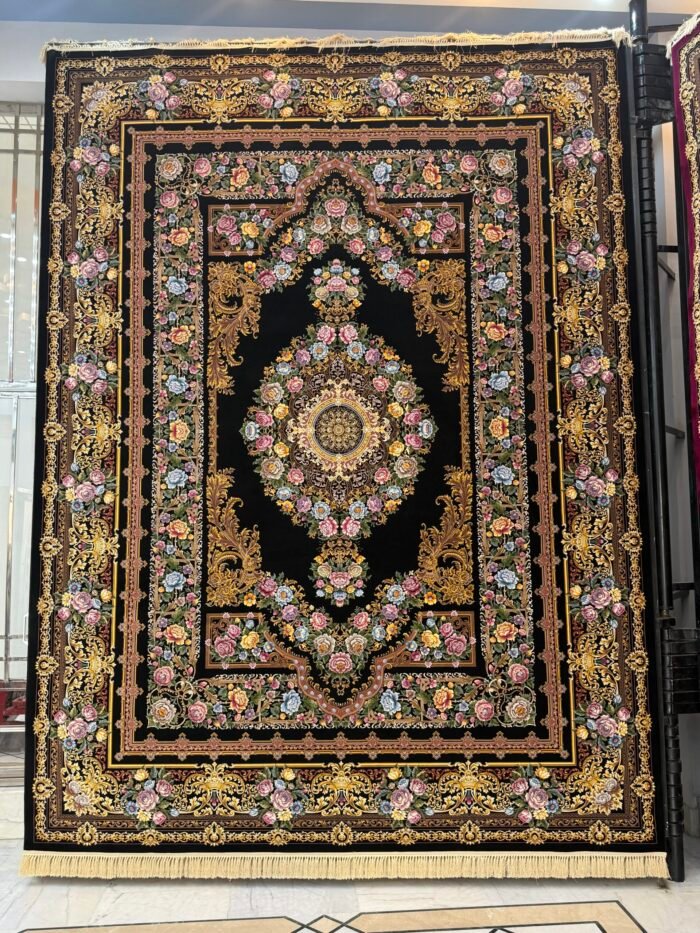
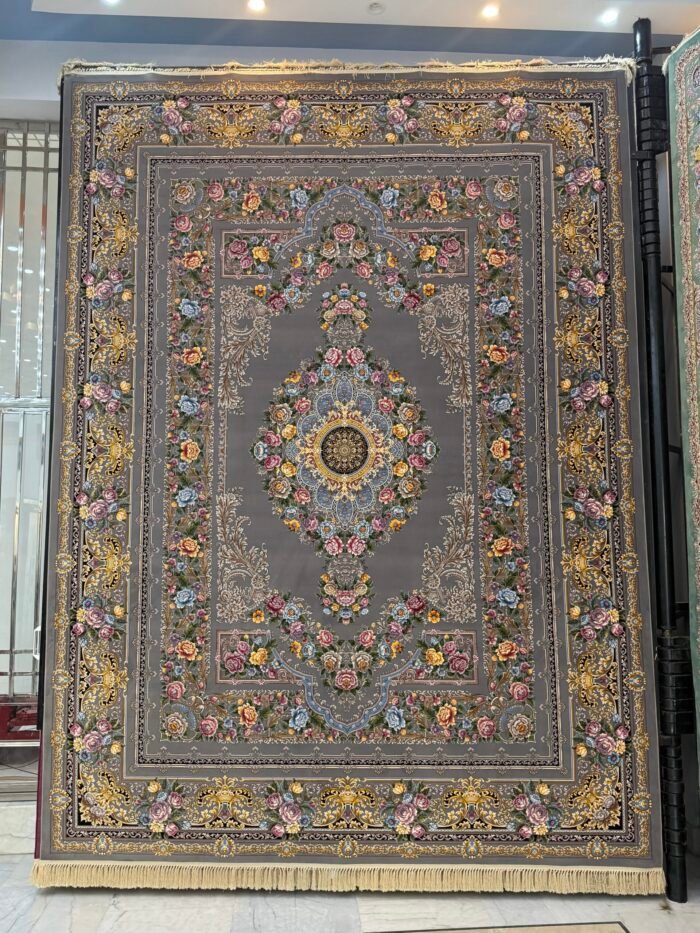
This is where a medallion design belongs. If the seating sits around the edges of the room, the centre of the rug stays visible all the time, and a medallion is the one design built to be seen in full.
Go for a deep field colour if the room is bright with marble or white tile, and a lighter cream or silver field if the room is dark. Size is usually 8×12, or 10×13 in a long room.
Family living room
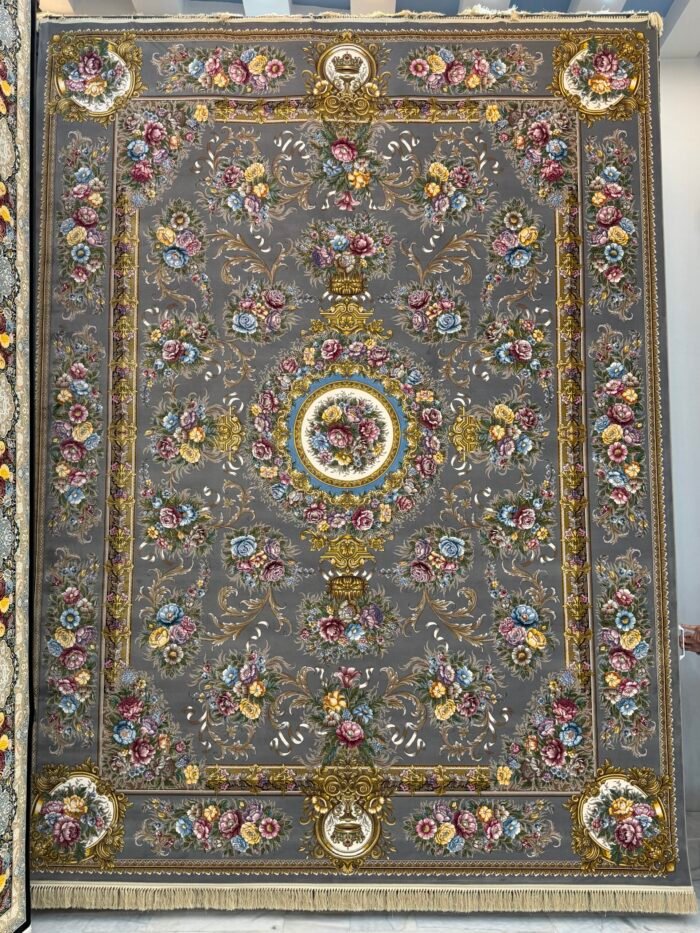
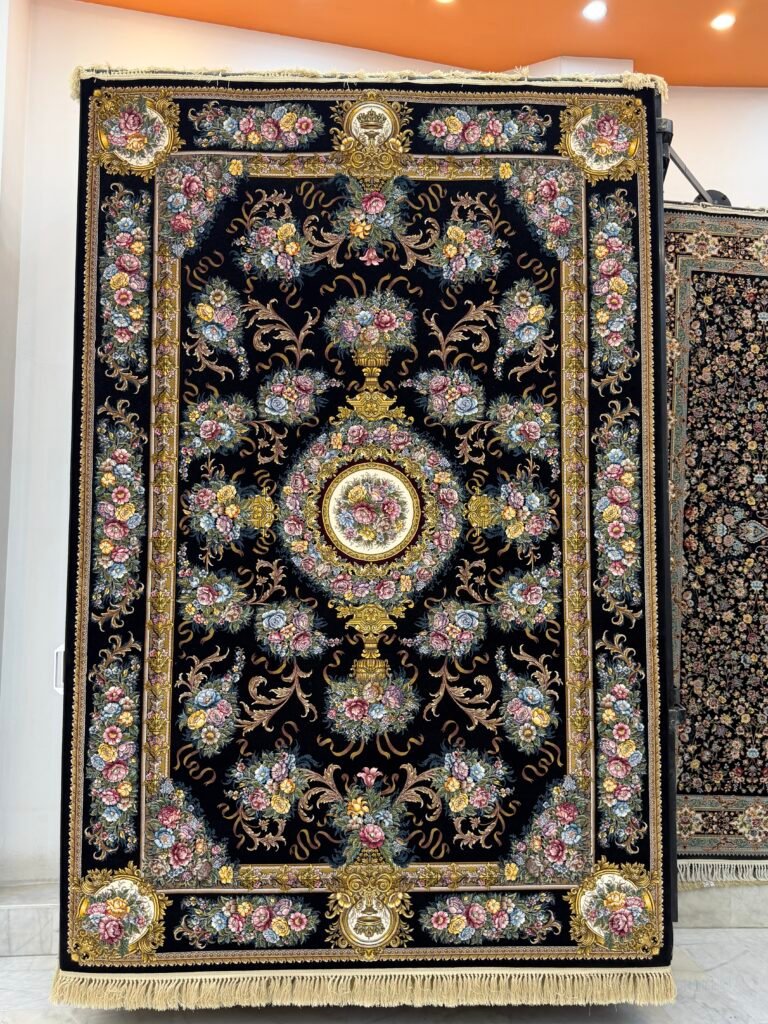
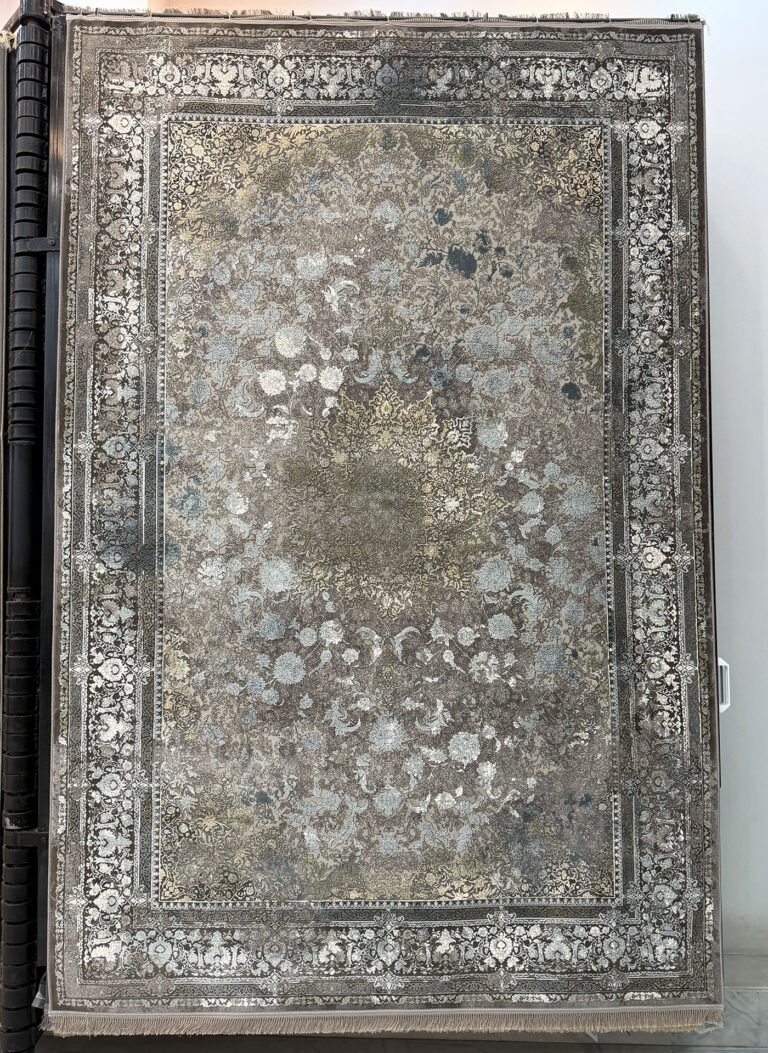
Choose density over delicacy. A floral rug with a fully covered field will take daily traffic and still look clean between washes. A busy but low-contrast pattern – lots of detail in tones close together – is the sweet spot: it hides wear without shouting.
1200 reeds is the sensible weight here. A living room is mostly seen standing up, from several feet away.
Bedroom
The bedroom rug is the one you look at from close range every morning, which is the single best argument for a finer weave. A Hareer rug at 1500 reeds earns its money here, where the sheen and the fine drawing are actually visible.
Leave 18 to 24 inches of rug showing past the sides and foot of the bed. A queen bed usually needs 7×10; a king bed 8×12.
A modern room
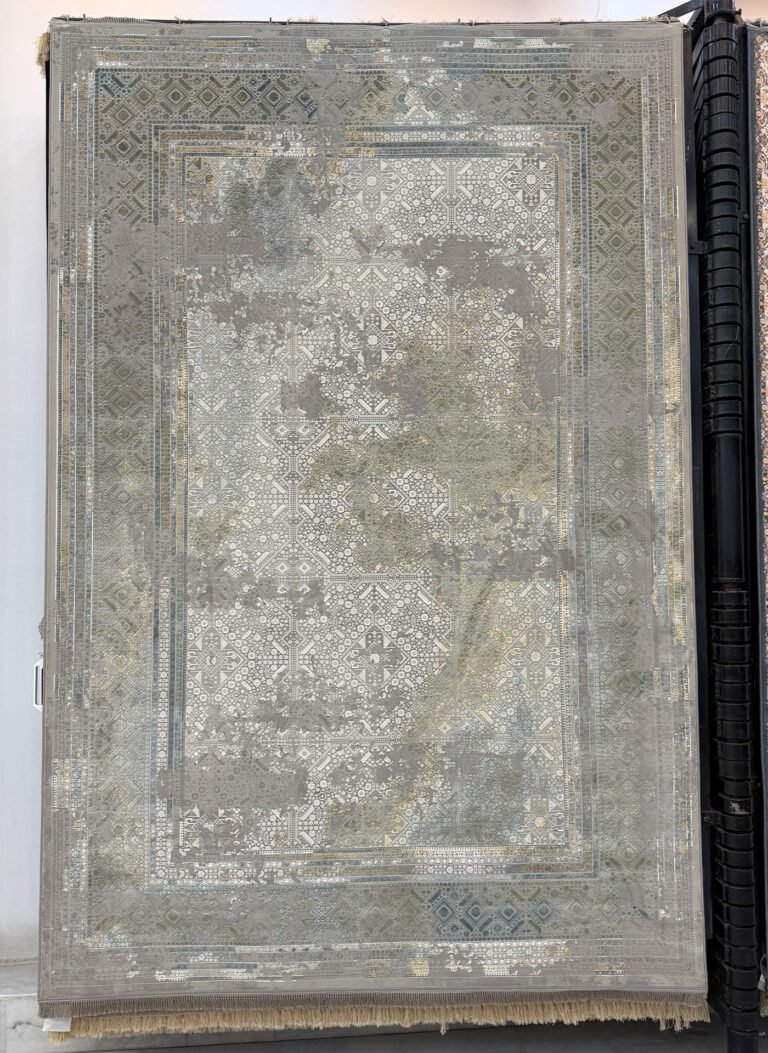
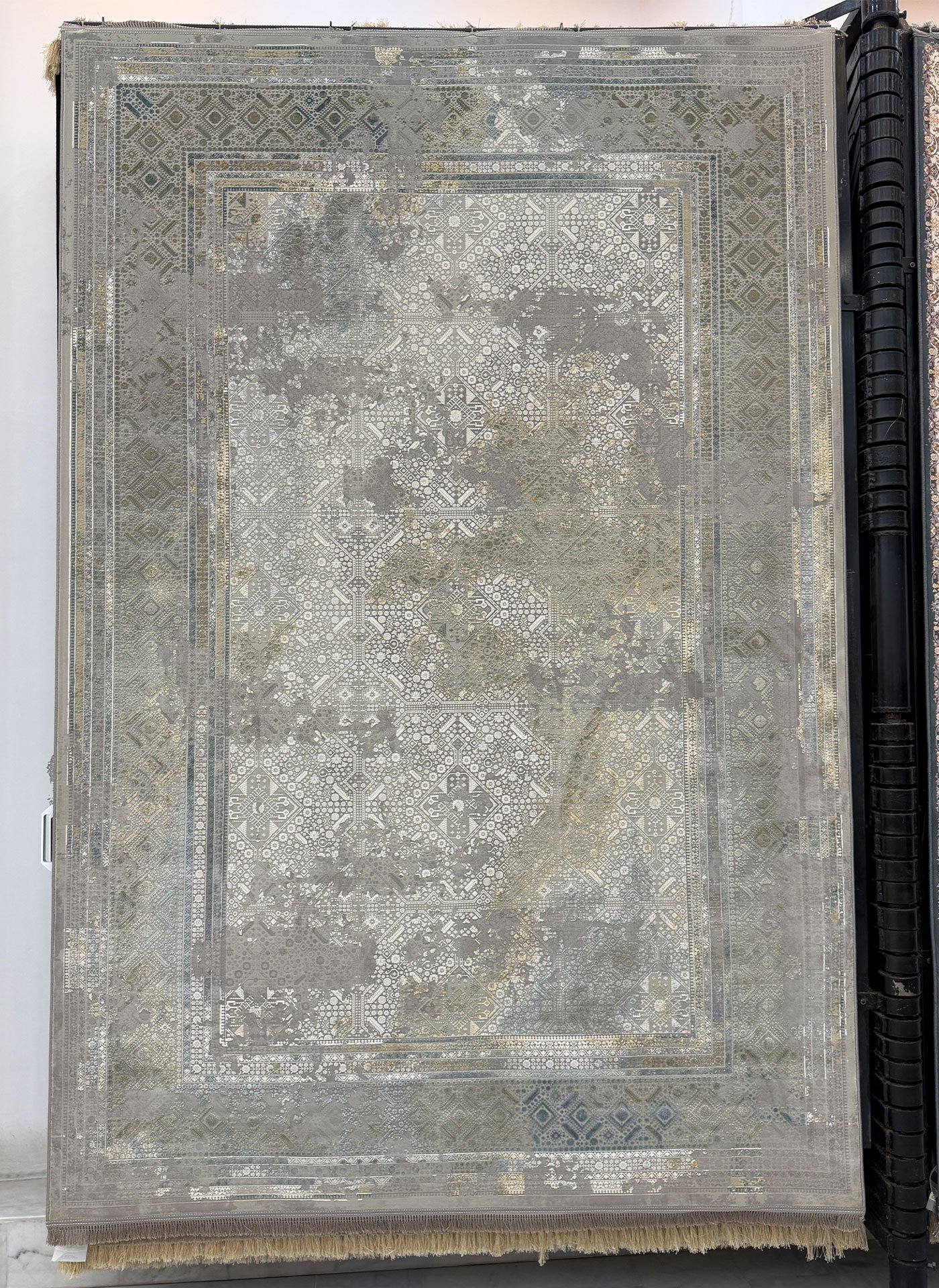
A traditional rug in a plain modern room is the most reliable pairing in interior design, because the rug supplies all the warmth the room is missing. If you want that without high contrast, the Vintage family gives you classical patterns in softened palettes that sit quietly against straight lines.
What is not worth paying extra for
- The highest reed count regardless of design. A bold, open pattern does not need 1500 to look right. Match the weave to the drawing.
- A rug that is too small but beautifully made. Size beats specification every time. A well-sized 700 beats an undersized 1500.
- A pale field in a room that gets used. It will look wonderful for a season.
- Matching everything. Pull one or two colours out of the rug for cushions and curtains. An exact match looks like a showroom set.
A simple way to choose
Three questions, in this order, and the catalogue shrinks to something manageable.
- How big? Measure the floor, decide whether the furniture sits on the rug, and settle the size first.
- Feature or floor? Should the rug be the thing people notice, or should it stay quiet under everything else? This rules out most of the range on its own.
- How close will it be seen? Close range argues for a finer weave. Across a room, 1200 reeds is plenty.
Colour comes after those three, and it is easier than people expect: photograph the room and look at the picture in black and white. If the room reads dark, choose a light field. If it reads bright and hard, choose a deep one.
Where traditional rugs are made well
Traditional Persian design has lasted because it keeps working as rooms change around it. What has changed is the making. High-density looms now produce these patterns with an evenness across the whole field that is difficult to achieve by hand, in repeatable sizes, at a price that puts a genuinely good rug in an ordinary house.
Kazmi Carpets has sold traditional Persian rugs and carpets in Quetta since 2005, imported from the historic heart of Iranian weaving and woven on modern ultra-high-density looms. You can browse the whole collection by design, reed count and size, or read our local buyer’s guide to carpets and rugs in Quetta before you visit.