What Is a Persian Carpet? A Guide to Persian-Inspired Designs
Medallions, fields, borders and palmettes explained. How a Persian-inspired design is put together, what the motifs are called, and why the style has lasted.
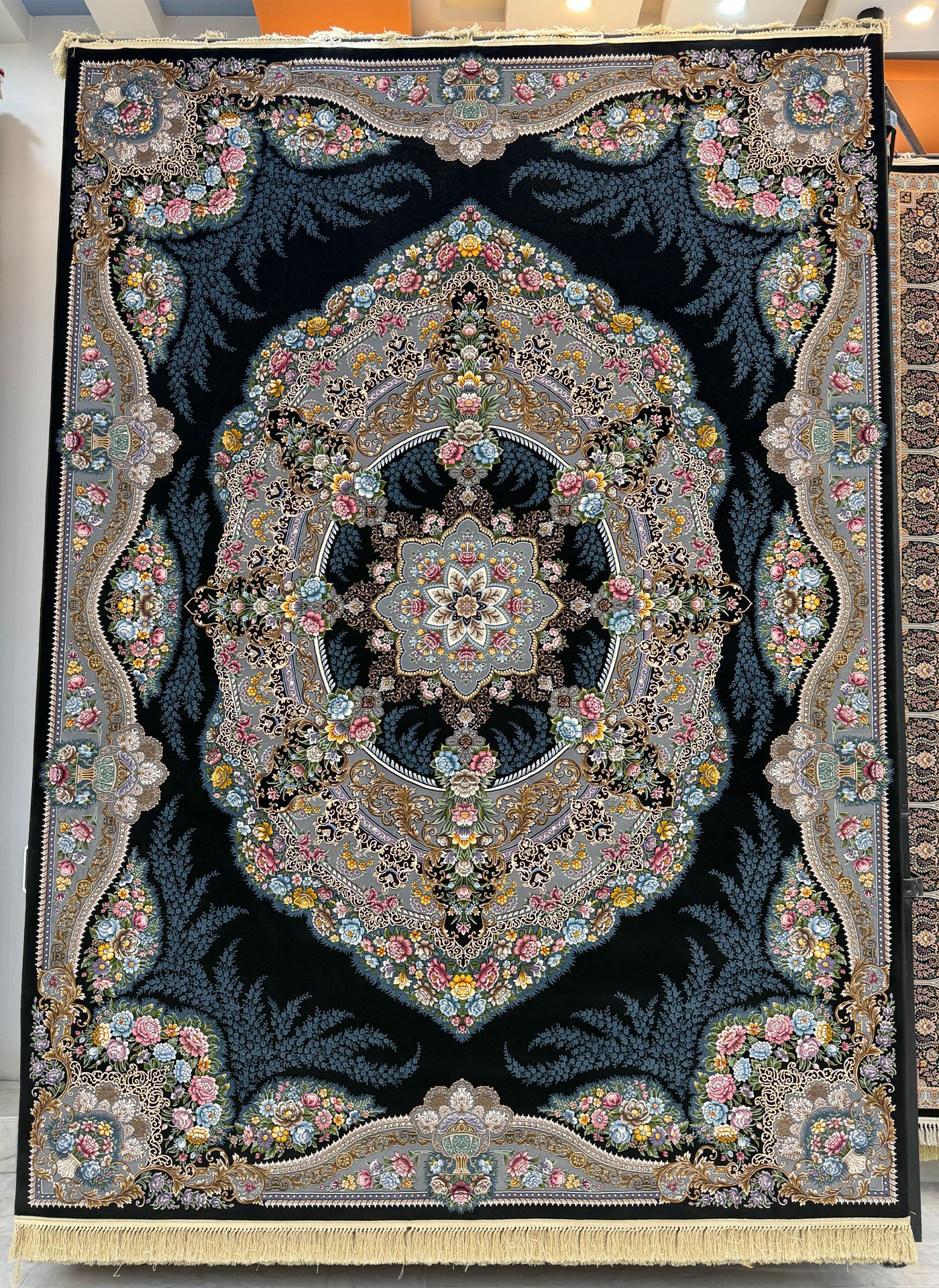
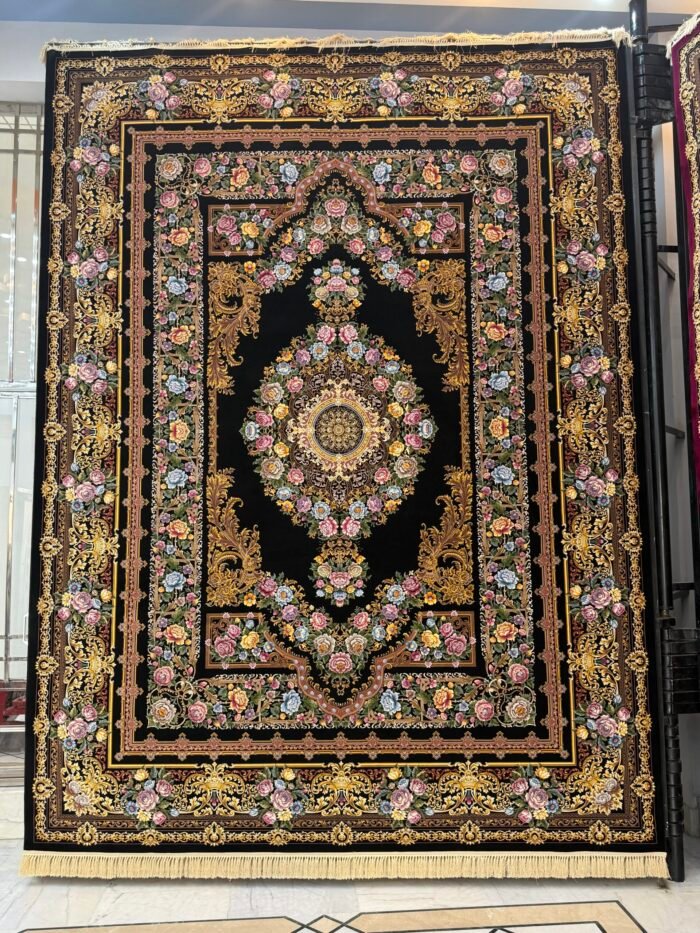
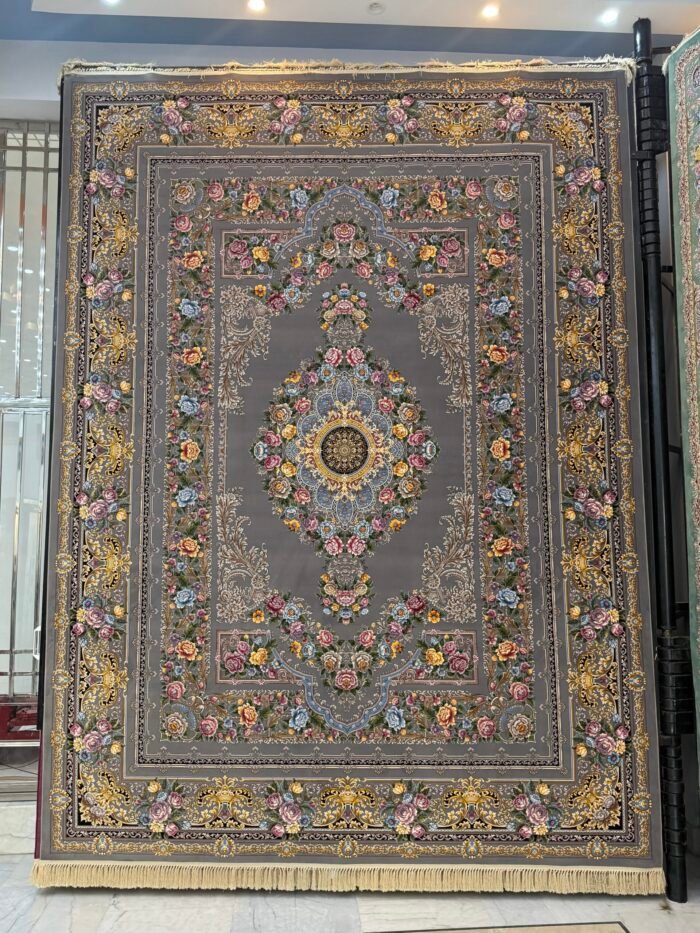
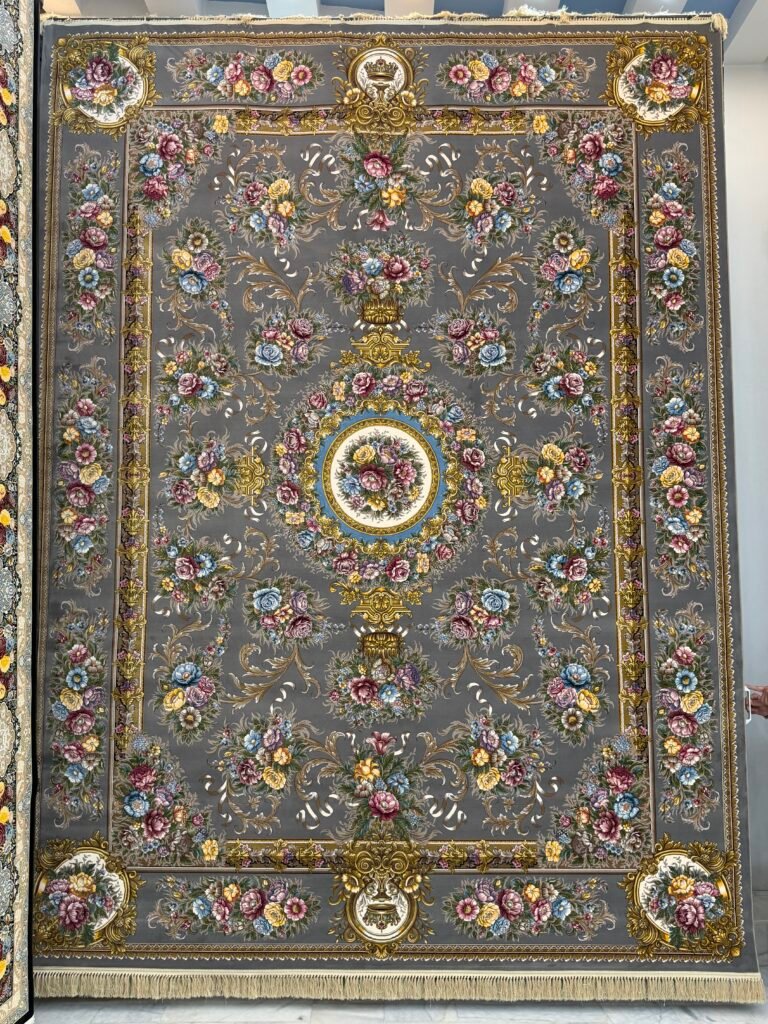
Ask most people what a Persian carpet looks like and they will describe something fairly specific: a central medallion, a dense field of flowers and vines, and a wide decorated border running all the way round. That description is doing a lot of work, because it is the structure underneath thousands of different designs.
Understanding that structure is the most useful thing you can do before choosing a carpet, because it tells you what you are actually looking at and why one design feels calm and another feels busy.
The anatomy of a Persian design
Almost every Persian-style carpet is built from the same set of parts. Once you can name them, every carpet becomes easier to read.
The field
The field is the large central area inside the border. It carries the main colour of the carpet and most of the pattern. A field can be dense and fully covered, or open and sparse with pattern only at the edges. Dense fields hide marks and foot traffic well. Open fields feel calmer and show off the colour.
The medallion
The medallion is the shape at the centre of the field, often a rounded or star-like form with pendants extending above and below it. It gives the carpet a clear middle, which is why medallion designs work so well under a coffee table or in the centre of a seating arrangement.
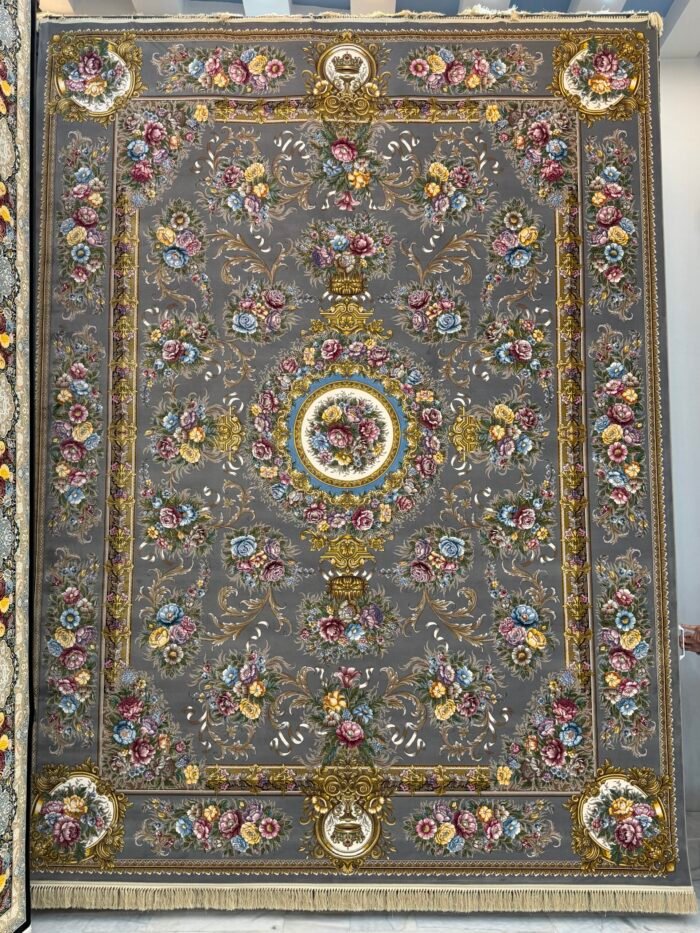
Not every Persian design has one. All-over designs repeat a pattern across the whole field with no centre at all, and those suit rooms where the furniture will cover the middle of the carpet anyway.
The corners
Corner pieces, often quarter-sections of the medallion shape, sit in the four corners of the field. They frame the medallion and make the design feel resolved rather than floating.
The border
The border is the frame. It is usually made of one wide main band with narrower guard bands on either side, and it runs continuously around the carpet. A wide, strongly contrasting border makes a carpet feel formal and contained. A narrow, quiet border lets the field dominate.
The motifs you will keep seeing
Persian design draws on a vocabulary of repeated shapes. You do not need to know their names to enjoy a carpet, but recognising them makes it much easier to compare two designs and say why you prefer one.
- The palmette – a stylised fan-shaped flower, usually the largest single motif in the field.
- The rosette – a small circular flower, often scattered through the field to fill space between larger motifs.
- Vine scrolls – curving stems that link the flowers together and give the field its sense of movement.
- The boteh – the curved teardrop shape that became known in Europe as paisley.
- Cloud bands – ribbon-like curling forms, often used in borders.
- Trellis and lattice – a repeating geometric grid holding flowers in place, common in all-over designs.
Colour
Persian-inspired palettes tend to be built around a strong field colour with the pattern picked out in contrasting tones. Deep reds, indigo and midnight blues, cream and ivory, soft greys and silvers, and sage and moss greens all appear regularly.
What matters when you are choosing is not which colours are traditional, but how the carpet will sit against what is already in the room. A deep red field warms a room with a lot of white marble. A grey or silver field calms a room that already has strong wood tones. Cream and ivory open up a small or dark room.
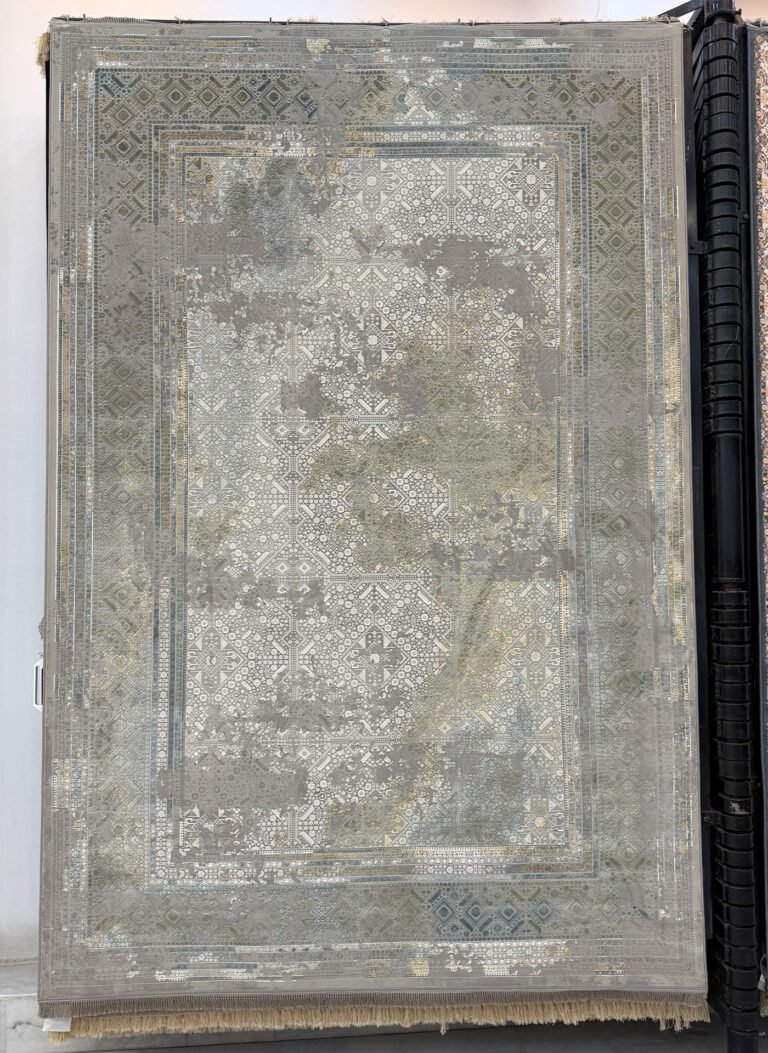
If you want to see the range, the Floral collection shows the flowering-field designs, while the Vintage collection shows the same traditional patterns in deliberately softened, faded palettes.
Persian-inspired, and what that means
It is worth being precise about language, because the carpet trade is not always careful with it.
A Persian-inspired or Persian-design carpet is one that uses this design language – the medallion, the field, the border, the palmettes and vine scrolls – rather than one that makes a claim about how or where it was made.
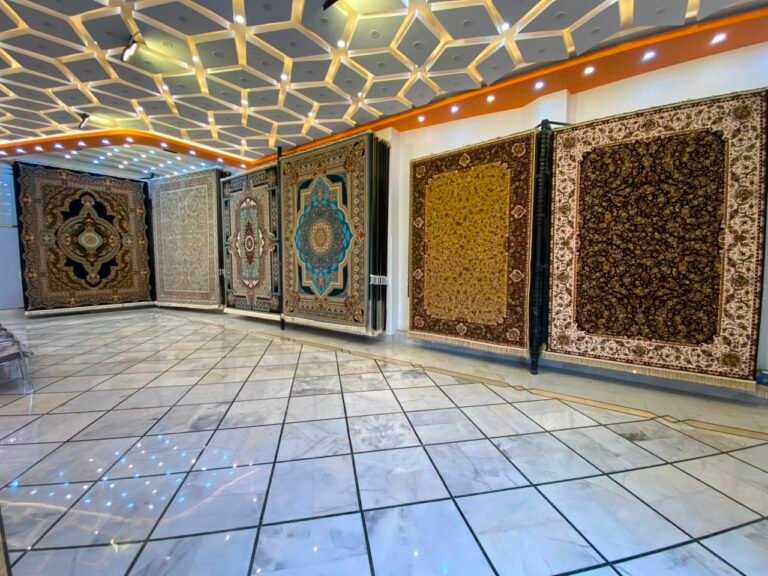
Kazmi carpets are machine-made on high-density looms, and imported from Iran. The designs are traditional; the method of making them is modern. Both of those things are true at once, and we would rather say so plainly than blur the line. A machine-made carpet is not trying to be a hand-knotted one. It is a different product, at a different price, with its own advantages: consistency across the whole field, a very even pile, and repeatable sizes.
Why these designs have lasted
Persian design has stayed in fashion for an unusually long time, and there are practical reasons for it rather than just sentimental ones.
- The pattern hides life. A dense floral field disguises crumbs, footmarks and the ordinary wear of a room used by a family. A plain carpet shows everything.
- It works with almost any furniture. Because the palette is usually built from several colours, there is nearly always something in the carpet that picks up something in the room.
- The structure gives a room a centre. A medallion tells the eye where the middle of the room is, which is exactly what a seating arrangement needs.
- It reads as considered. A room with a traditional carpet rarely looks like it was thrown together, even when the rest of the furniture is plain.
Choosing one
Start with the field colour and how light or dark the room is. Then decide between a medallion design and an all-over design, based on whether the middle of the carpet will be visible or covered by furniture. Pattern density comes last, and it is mostly a question of how busy you want the room to feel.
If you are choosing for a specific room, our guide to choosing a carpet for your living room goes through it step by step. Otherwise, browse the Kazmi collection and filter by design, weave and size.