How to Choose a Luxury Carpet for Your Home
Luxury in a carpet is several ordinary things being right at once. Design, size, detail, colour and proportion, and how to judge a carpet when you are standing over it.
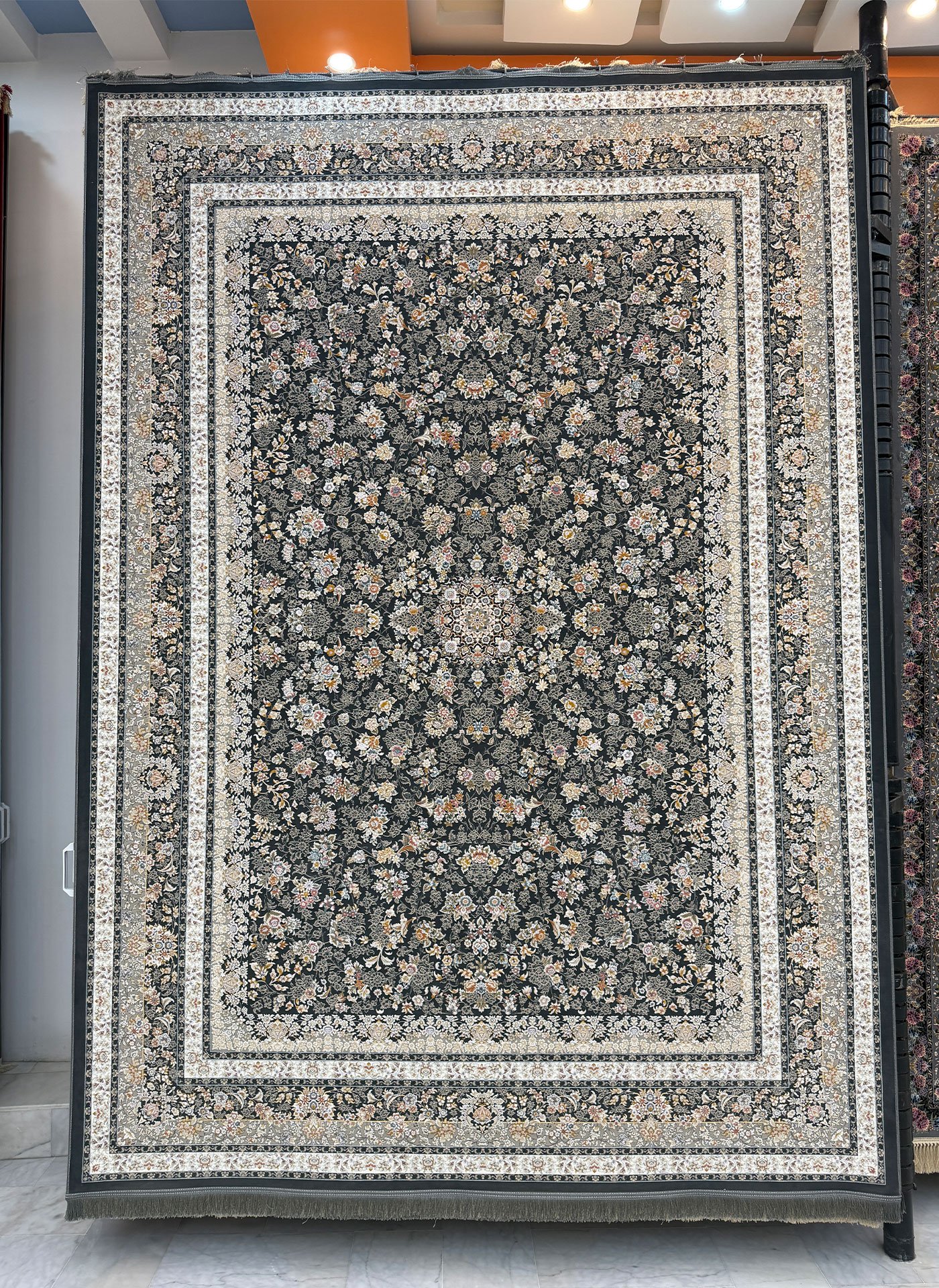
Luxury is an easy word to use about carpets and a hard one to define. It is not simply the highest price in the shop, and it is not the most intricate pattern either. In practice, a carpet feels luxurious when several ordinary things are right at the same time: the size suits the room, the colour suits the light, the pattern is drawn cleanly, and the whole thing looks like it was chosen rather than bought.
Here is how to work through those decisions.
Design comes first, but not the way you think
Most people start by looking at designs, fall in love with one, and then discover it does not work in their room. It is worth doing one step of thinking before that.
Decide whether the carpet should be the feature of the room or the calm floor beneath it. A room that is already full – carved furniture, patterned curtains, ornament on the walls – needs a calm carpet. A plain room with straight lines and neutral upholstery can carry a strong medallion design, and will be better for it.
Once you know which of the two you want, the catalogue gets much smaller and choosing becomes a pleasure rather than a chore.
Size is where luxury is won or lost
No amount of quality rescues a carpet that is too small. A fine 1500 reed carpet that floats in the middle of a large room will always look like a mistake; a well-sized 700 will look like a decision.
Kazmi carpets are finished in four sizes – 5×8 (3.5M), 7×10 (6M), 8×12 (9M) and 10×13 (12M). Measure the floor, decide whether the furniture sits fully on the carpet or with front legs only, and pick from there. When you are between two sizes, take the larger one.
The full method is in our carpet size guide.
Detail and reed count
Reed count – shana, شانہ – is the density of the weave, and it decides how finely the pattern can be drawn. Kazmi carries 700, 1200 and 1500 reeds.
The honest guidance is that higher is not automatically better for every room. What a higher count buys you is detail at close range: cleaner curves on a medallion outline, finer stems on a vine scroll, more shading inside a palmette. In a bedroom or a formal room where the carpet is seen closely, that matters a great deal. In a large drawing room seen mostly from six feet away and standing up, 1200 reeds does the job very well.
Choose the count against the design. An intricate floral deserves a fine weave. A bold, open design does not need one. There is more in our guide to 700, 1200 and 1500 reed carpets.
Colour, judged against your own light
Colour is the decision people most often make in a showroom and regret at home, because showroom light is not your light.
Photograph your room on your phone and look at it in black and white. If the room reads mostly dark, a cream, ivory or silver field will lift it. If it reads mostly light – white walls, marble floors – a deep red, indigo or charcoal field will give it somewhere to settle. If there is a lot of warm wood, a cooler field keeps the room from collapsing into one shade of brown.
Then, if you can, see the carpet in daylight before you commit.
Proportion inside the room
Beyond size, there is proportion: how the carpet’s scale relates to the room’s.
A large-scale medallion in a small room will feel cramped, because the pattern has nowhere to resolve. A small, delicate all-over design in a very large room disappears into texture. Match the scale of the pattern to the scale of the space, and the room will feel settled in a way that is hard to put a finger on but easy to see.
What to look at when you are standing over a carpet
A few things worth checking in person, none of which need any expertise:
- Look along the border. The pattern should run evenly and the corners should resolve cleanly.
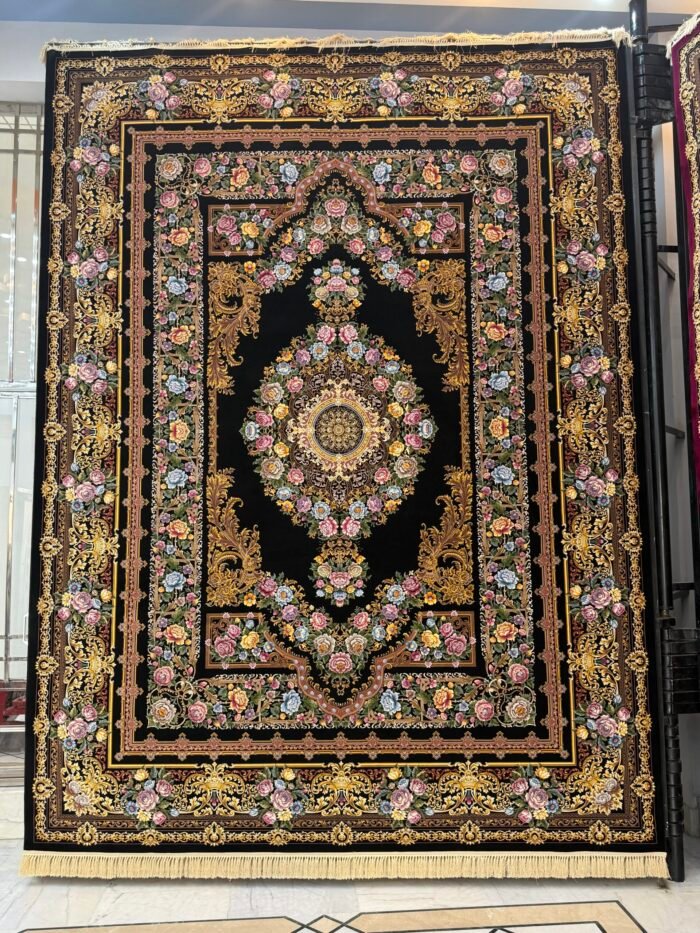
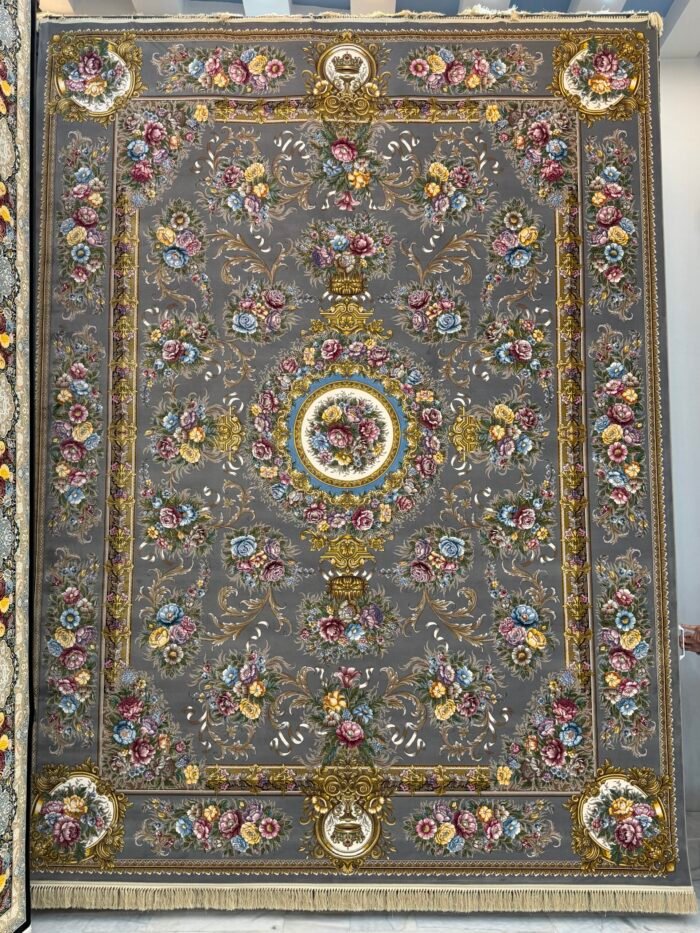
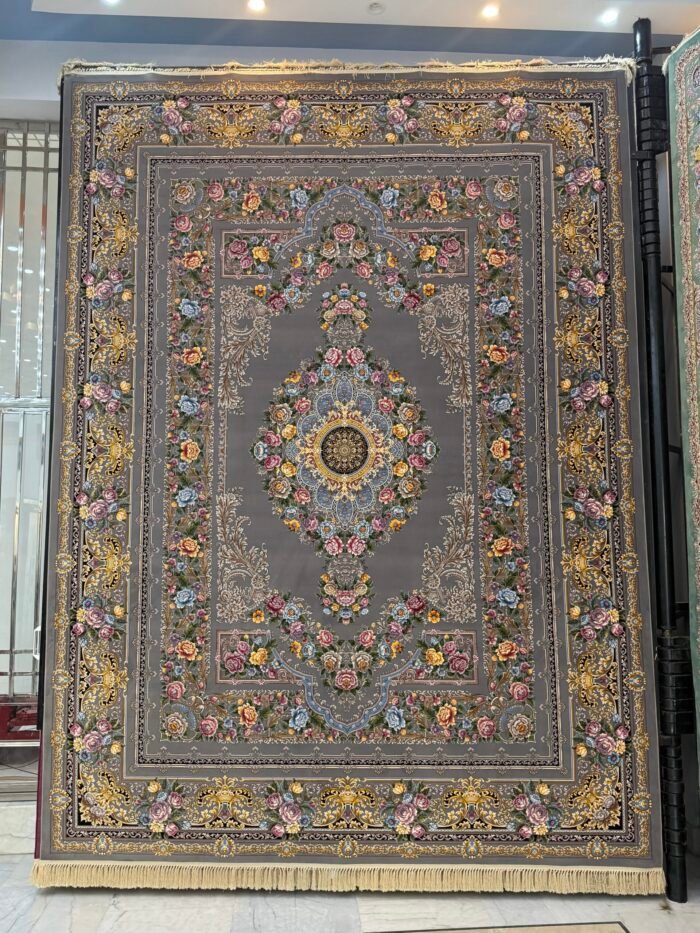
- Look at the curves. Medallion outlines and floral stems tell you more about the drawing than the colours do.
- Look at it from both ends. Pile has a direction, and a carpet reads slightly darker from one end than the other. Decide which way you want it to face in your room.
- Look at it in daylight. Colours shift under showroom lighting more than people expect.
- Stand back. Then walk towards it. A good carpet works at both distances.
Long-term appeal
The most useful test of a luxury carpet is not how it looks today but whether you will still want it in ten years, after the sofa has been replaced and the walls repainted.
Designs that survive that tend to share a few things: a palette of several related tones rather than one dominant colour, a pattern that rewards a second look without demanding attention, and a structure – field, medallion, border – that is not tied to a particular decade.
That is the real argument for traditional Persian design. It has stayed in rooms for a very long time because it keeps working as the rooms around it change.
About Kazmi Carpets
Since 2005 we have curated an exclusive collection of luxury Persian machine-made carpets, imported directly from the historic heart of Iranian weaving. We bridge the gap between ancient heritage and modern innovation, bringing the world’s finest traditional designs reimagined through cutting-edge, ultra-high-density loom technology.
What that means in practice is a traditional design language, produced with the consistency a modern loom allows: an even pile across the whole field, repeatable sizes, and the same design available in more than one weave.
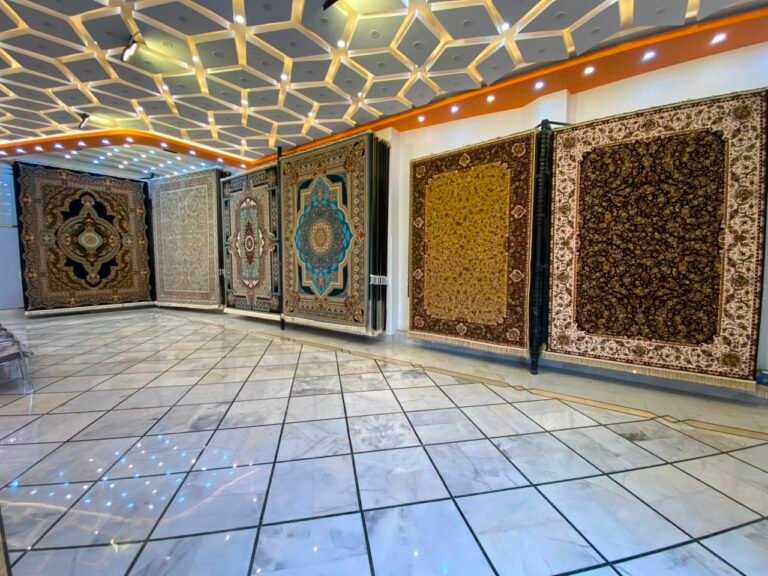
You can browse the full collection online, read about how a carpet reaches our floor on the Craft page, or visit the showroom on Alamdar Road in Quetta and see them laid out properly. Bring the dimensions of your room – it makes the whole conversation easier.