How to Choose a Carpet for Your Living Room
Size, colour, pattern, contrast and traffic, in the order that makes the decision easy. A practical method for choosing a living room carpet you will still like in five years.
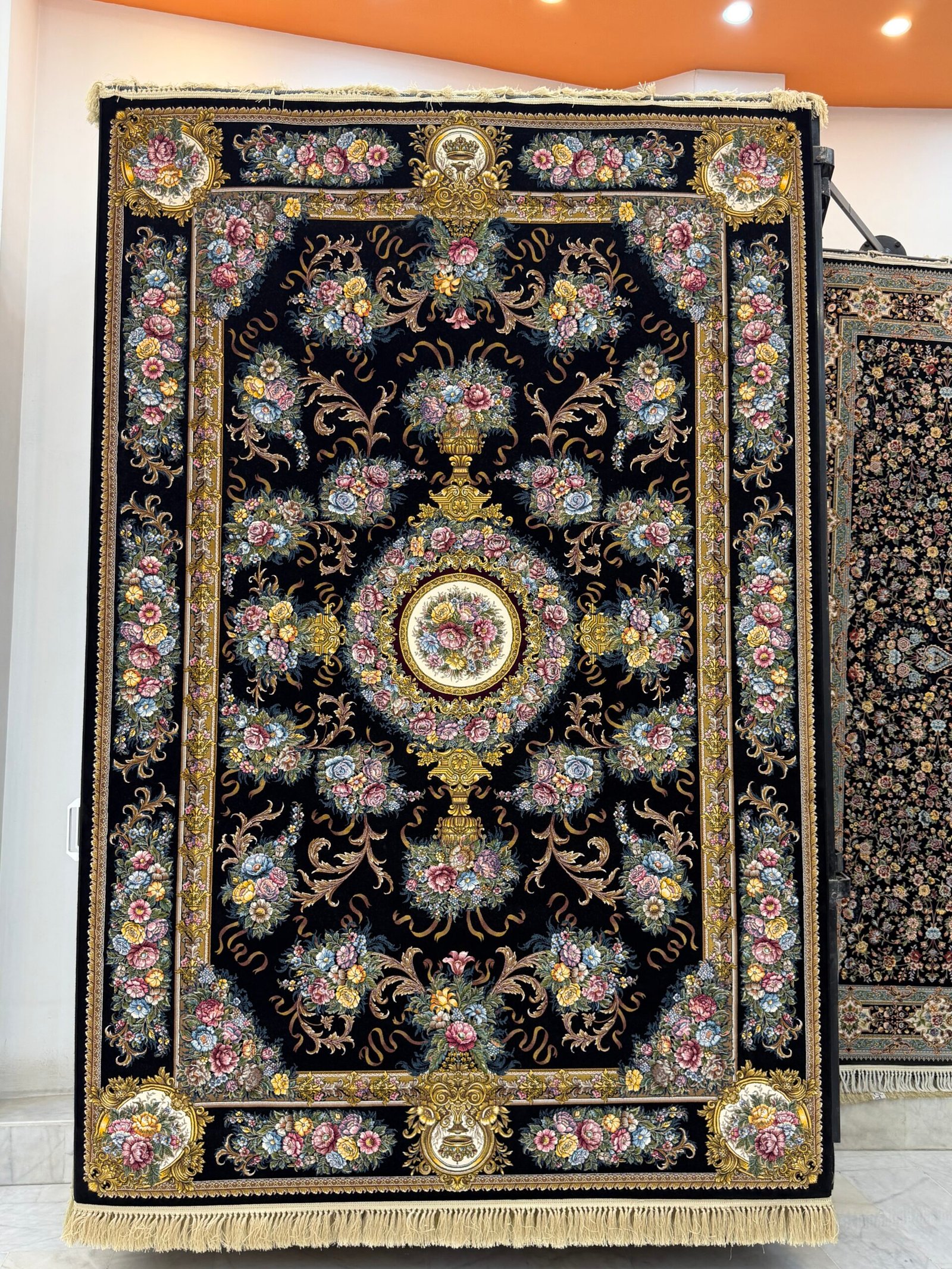
The living room carpet has more work to do than any other soft furnishing in the house. It has to hold the seating together, survive being walked on daily, and set the colour temperature of the room – all while being the one thing a guest notices in the first three seconds.
Here is a sensible order to make the decisions in, so that you are not trying to solve size, colour and pattern all at once.
1. Measure before you look at anything
Take the room’s dimensions in feet. Then decide how the carpet will meet the furniture, because that determines the size more than the room does.
The most practical arrangement for most living rooms is front legs on: the front feet of the sofa and chairs sit on the carpet, the back feet on the floor. It ties the seating together without needing the largest size. If your room is big enough for every piece of furniture to sit fully on the carpet, that looks even better.
As a rough guide, a medium living room usually lands on 7×10, a larger one on 8×12, and a long or open-plan room on 10×13. Our carpet size guide covers the measuring in detail.
2. Decide how the carpet relates to the walls
Two workable approaches, and they produce very different rooms.
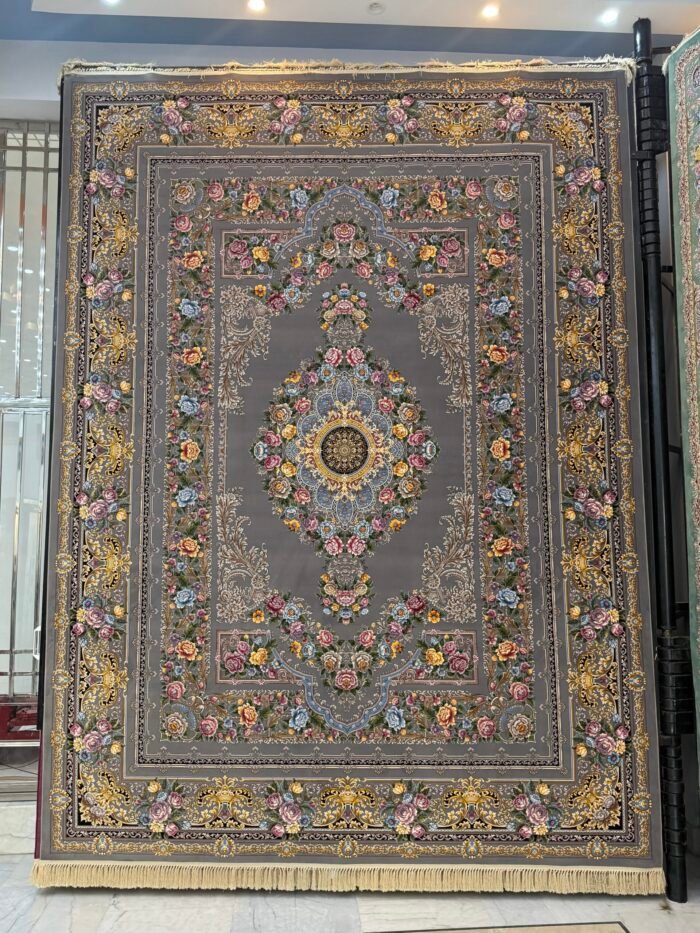
Carpet as a quiet floor. A soft, low-contrast design in a tone close to the walls. The room feels larger and calmer, and the furniture and artwork become the focus. Good if you already have strong curtains, patterned upholstery or a lot going on.
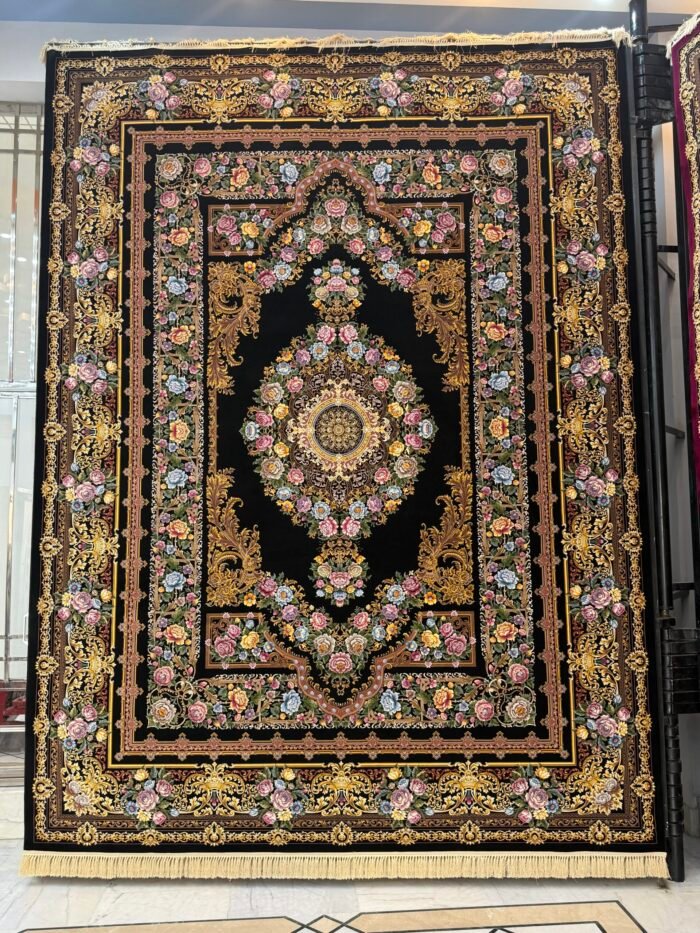
Carpet as the main event. A deep field colour and a clear medallion. The carpet becomes the anchor and everything else can stay simple. Good if the room is largely neutral and needs a centre of gravity.
Deciding which of these you want first will rule out about eighty per cent of the catalogue, which makes everything after this much easier.
3. Choose the field colour against your light
Colour is easier to get right if you think about the room’s light rather than about which colours you like in the abstract.
- A dark room, or one facing away from the sun: cream, ivory, silver or a soft grey field will lift it. A very dark carpet in a dark room makes the floor disappear.
- A bright room with a lot of marble or white tile: a deep red, indigo or charcoal field gives the room somewhere to settle, and stops the space feeling clinical.
- A room with heavy wooden furniture: a cooler field – grey, silver, sage – keeps the room from becoming entirely brown.
- A room you want to feel warm and formal: red and gold tones do this more reliably than anything else.
Take a photograph of the room on your phone and look at it in black and white. It tells you immediately whether your room is mostly light, mostly dark, or evenly split, which is the single most useful piece of information for choosing a field colour.
4. Pattern and contrast
Pattern density is mostly a practical decision dressed up as an aesthetic one.
A dense floral field hides crumbs, footmarks and the ordinary traffic of a family room extremely well. A plain or open field shows everything, and will need more attention. In a living room that gets daily use, density is your friend.
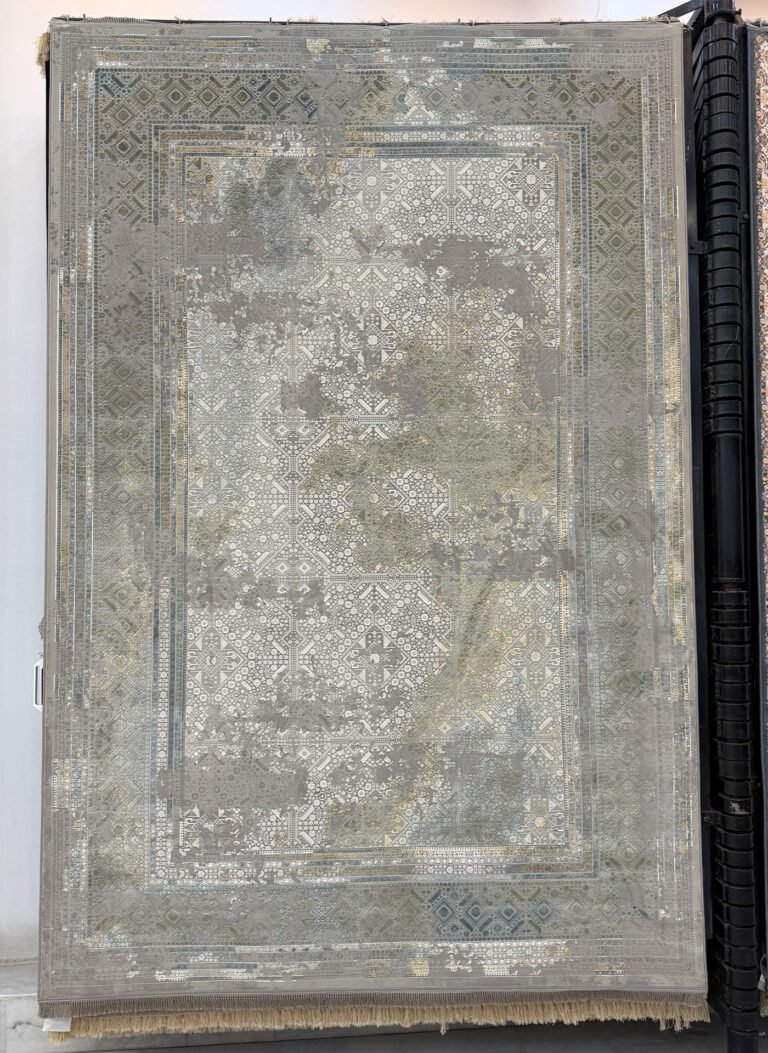
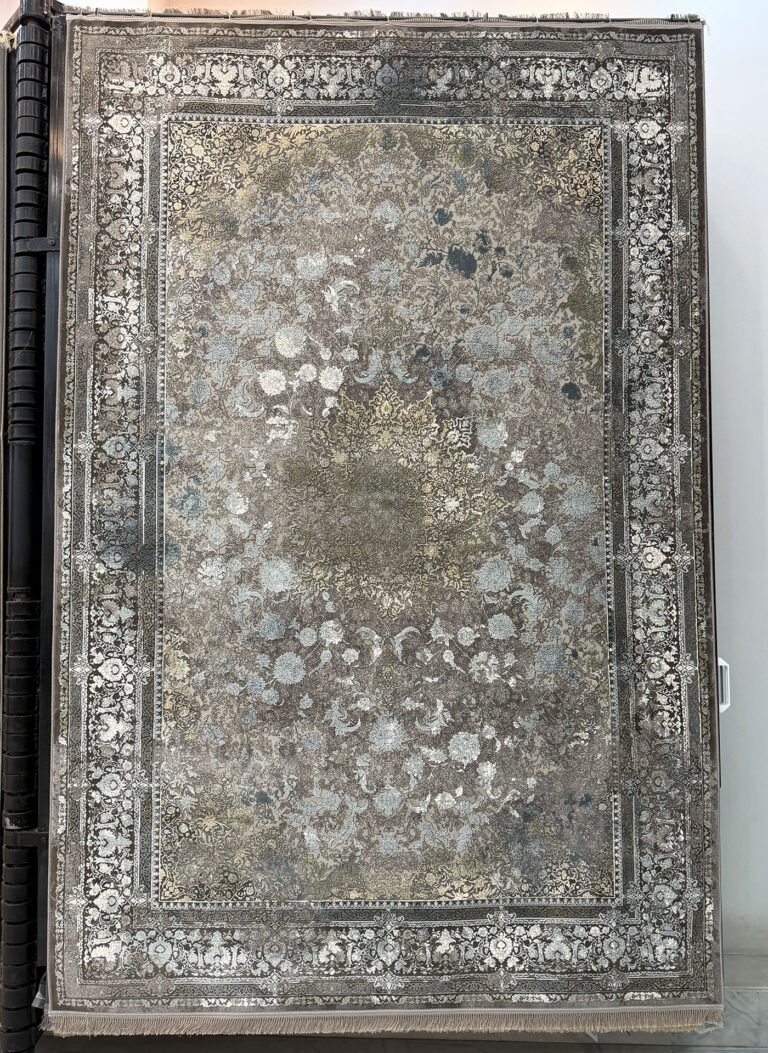
Contrast is separate from density. A carpet can be busy but low-contrast – lots of pattern in tones close together – which reads as texture rather than as pattern from a distance. That is often the best of both: it hides wear without shouting.
5. Think about the traffic
Look at how people actually cross the room. If there is a route from the door to the seating that everyone takes, the carpet will wear along that line first.
Two things help. First, choose a size that lets the walking route sit fully on the carpet rather than half on and half off, because a half-covered route wears unevenly and shows a line. Second, rotate the carpet occasionally, so the same strip is not always taking the traffic.
6. Fit it to the rest of the interior
A traditional Persian design sits comfortably in a modern room, as long as one of the two is allowed to be quiet. A heavily patterned carpet with heavily patterned curtains and a patterned sofa is where rooms go wrong.
The reliable formula: one patterned element, everything else in plain tones drawn from that pattern. If the carpet is the patterned element, pull a cushion colour and a curtain colour out of it and the room will look coordinated without looking matched.
We cover this in more detail in matching a Persian-style carpet with your furniture.
7. Then, and only then, reed count
Reed count decides how finely the pattern is drawn. In a living room, which is mostly viewed standing up and from several feet away, 1200 reeds is the sensible default. Go to 1500 if the design is intricate and the room is formal; 700 is a fair choice for a busy family room or a first carpet.
Our guide to 700, 1200 and 1500 reed carpets explains what actually changes.
A short checklist
- Measure the floor, decide on front-legs-on or all-legs-on, and pick the size from that
- Decide whether the carpet is the quiet floor or the main event
- Choose the field colour for the room’s light, not in the abstract
- Prefer a denser field in a room that gets daily use
- Keep one patterned element in the room and let the rest be plain
- Settle reed count last, against the design and the budget
When you have a size and a rough palette in mind, browse the Kazmi collection and filter down, or bring your room measurements to the showroom on Alamdar Road and we will lay a few out for you.